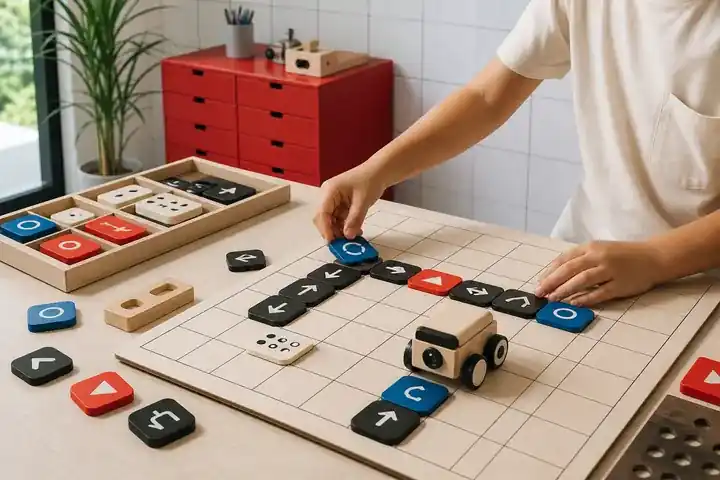
01 / Overview
Feels playful, technical, nostalgic, with a deliberate rather than generic personality.
Signature move
A tiny one-bit icon set expands into environments, rewards, and state changes without losing its grid logic.
- Intensity
- expressive
- Versatility
- 3 / 5
- ID
one-bit-playroom
02 / Example art
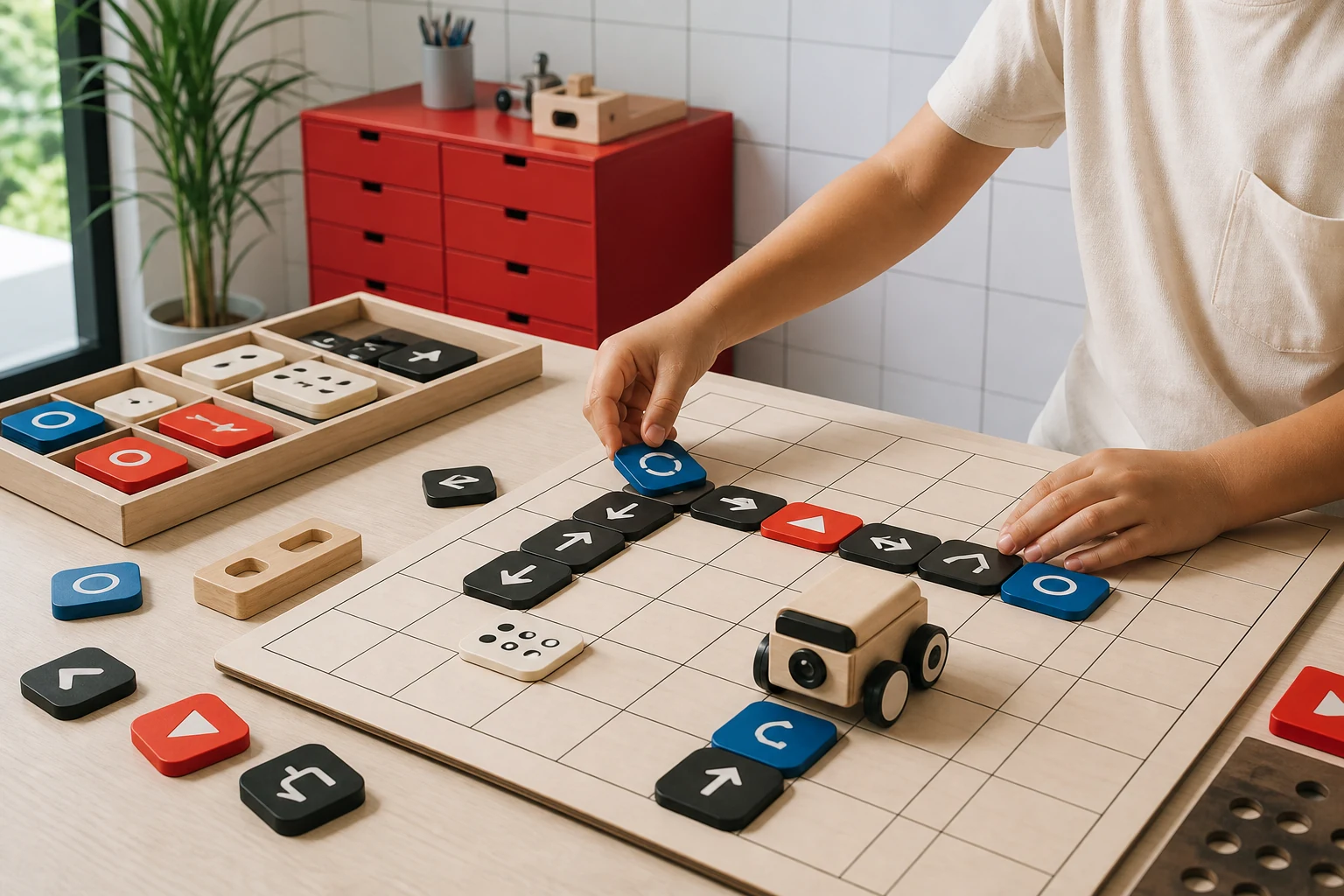
One-Bit Playroom
Original artwork establishes the direction's visual language before it is translated into an interface.
03 / Website example
Try the page as a working experience
Explore this responsive page directly inside the catalog. Its primary navigation, controls, and interactions are live; open it full screen to experience the original composition.
Examples are in production
The direction is available now. Its brand websites are being built as independent sites and will appear here during local production.
04 / Fit
Suitable for
Suitable for
gaming / education / developer tools / toys / community / consumer tech
Business goals
play / collect / learn / customize
A strong choice when
Strong when gaming, education, developer tools, toys need to play, collect, learn through a memorable but repeatable visual system.
Avoid when
Avoid when the brief needs complete visual neutrality or when this direction would compete with essential information and actions.
05 / Design system
Design system
Rules that should remain coherent as content, devices, and business needs change.
- 01Composition
- Stable grids, tile logic, constrained scenes, and clear status zones with room for character.
- 02Hierarchy
- Make the signature move the first organizing decision, then reveal supporting information through stable scale, alignment, and sequence.
- 03Typography
- Readable bitmap or mono display face paired with a modern text face for longer content.
- 04Color
- One-bit or tiny indexed palettes that expand only for state, reward, or accessibility.
- 05Imagery
- Pixel objects, icons, sprites, and diagrams built on one explicit resolution system.
- 06Material
- LCD, e-paper, dot matrix, cartridge, or screen texture used selectively.
- 07Motion
- Low-frame expressive loops, crisp state changes, and immediate input feedback.
Adaptation
Keep the signature move invariant. Adapt imagery, material, language, and interaction to the actual gaming, education, developer tools context rather than copying a finished reference.
Accessibility
Preserve a visible reading order and sufficient working space. Provide an equivalent reduced-motion state. Meet WCAG AA contrast, visible focus, 44px targets, and never encode meaning through color or style alone.
06 / Background
Background
These lineages are source-linked research doors, not permission to copy a particular work or brand.
- 01one bit icon
- 02pixel art
- 03lcd game
- 04limited animation
Guardrail
Provide scalable labels, non-pixel accessibility paths, and clear touch targets.
07 / Agent recipe
one-bit-playroom
Use the stable ID and recipe to give design agents the same context. Always adapt the output to the real business.
Prompt recipe
Create one original 3:2 landscape key artwork for the fictional brand Logic Patch, a browser-based logic puzzle club for curious teenagers and adults. This is the canonical showcase for the One-Bit Playroom design direction. Show one coherent physical-digital play scene: a crisp black-and-ivory one-bit puzzle board on a desktop monitor, chunky square controls, printed puzzle tiles, and hands actively arranging a logic sequence. Use hard pixel geometry, a strict grid, playful rule-based composition, and only two main values with precise red and cobalt state accents. The image should feel like a modern playable product world, not retro nostalgia pasted onto a generic SaaS page. Editorial product photography integrated with accurate CSS-like pixel interface geometry, legible at thumbnail scale, no collage or mood board. No readable words, letters, numbers, logo, watermark, real game, copyrighted character, identifiable face, copied UI, or artist imitation. Keep essential content inside an 8 percent safe margin and allow clean responsive crops.Working constraints
- Use one coherent direction grammar, not a collage of style references.
- Use only a fictional business and minimal exact text.
- Do not imitate a living artist, real brand, client project, or proprietary campaign.
- Preserve essential hierarchy, legibility, contrast, and reduced-motion equivalence.
- Avoid: pixel font for body copy.
- Avoid: nostalgia unrelated to product.
- Avoid: low-resolution assets scaled inconsistently.
08 / Sources & rights
Sources & rights
Work ownerSol
Example licenseAll rights reserved
- 01
The Museum of Modern Art — Susan Kare, "Apple Macintosh OS icon sketchbook", 1982(MoMA / SFMOMA 共同収蔵)
Role: lineage · Linked source retains its own rights; IndexStyle structured description is CC BY 4.0.
- 02
Wikimedia Commons — Pixel art
Role: lineage · Linked source retains its own rights; IndexStyle structured description is CC BY 4.0.
- 03
ニンテンドーミュージアム
Role: lineage · Linked source retains its own rights; IndexStyle structured description is CC BY 4.0.
- 04
Britannica — Animation
Role: lineage · Linked source retains its own rights; IndexStyle structured description is CC BY 4.0.
The choice will be carried into the Quick Brief and can still be removed before sending.
Choose this style